Discover the captivating story of the world’s most docile and affectionate cat breed, born from a California legend.
—
Introduction: A Breed Born from a Beautiful Accident
In the sun-drenched neighborhoods of 1960s Riverside, California, a white Angora-type cat named Josephine embarked on a journey that would forever change the world of feline companionship. After surviving a traumatic accident, Josephine produced a litter of kittens with an extraordinary trait: they went completely limp and relaxed when picked up, like child’s ragdolls. From this remarkable beginning emerged one of the most beloved cat breeds in existence—the Ragdoll.
Ann Baker, a Persian cat breeder with a keen eye for unique qualities, recognized something special in Josephine’s offspring. Through selective breeding and careful documentation, she established the foundation for a breed that would become synonymous with gentleness, beauty, and unwavering devotion to their human companions.

The California Origin Story: From Street Cat to Show Star
The Legend of Josephine
The Ragdoll’s origin story reads like a feline fairy tale. Josephine, a semi-feral white cat with a gentle disposition, lived in the neighborhood of Ann Baker. After being struck by a car and nursed back to health, Josephine’s subsequent litters displayed the remarkable limpness and docility that would become the breed’s trademark.
While the genetic mechanics behind this transformation remain debated among feline geneticists, the results were undeniable. Josephine’s kittens inherited not only her striking appearance but also her exceptionally calm temperament—a combination that would prove irresistible to cat lovers worldwide.
The Foundation Cats:
| Cat Name | Color/Pattern | Contribution to Breed |
| Josephine | White | The original mother cat |
| Daddy Warbucks | Seal Point Mitted | Foundation sire |
| Fugianna | Seal Bicolor | Foundation queen |
| Buckwheat | Seal Point Mitted | Foundation queen |
| Kyoto | Seal Point Mitted | Early breeding stock |
The Baker Legacy
Ann Baker’s dedication to establishing the Ragdoll as a distinct breed was both passionate and controversial. She trademarked the name “Ragdoll” and established strict breeding protocols through her International Ragdoll Cat Association (IRCA). Her methods, while sometimes contentious, ensured the breed’s genetic consistency and preserved its unique characteristics.
Key Milestones in Ragdoll History:
- • 1963: Josephine produces the first documented “Ragdoll” kittens
- • 1965: Ann Baker begins formal breeding program
- • 1971: IRCA established to protect the breed
- • 1975: Denny and Laura Dayton break from IRCA, form Ragdoll Fanciers Club International (RFCI)
- • 1993: CFA grants championship status
- • 2000s: Ragdoll becomes one of the most popular cat breeds globally

Distinctive Appearance: Beauty in Softness
The Ragdoll Silhouette
Ragdoll cats possess a substantial, muscular build that belies their gentle nature. Often described as “puppy cats” due to their size and behavior, these felines are among the largest domesticated cat breeds, with males commonly reaching 15-20 pounds and females 10-15 pounds.
Physical Characteristics:
- • Body: Large, long, and rectangular with a sturdy bone structure
- • Head: Broad, modified wedge with a flat plane between the ears
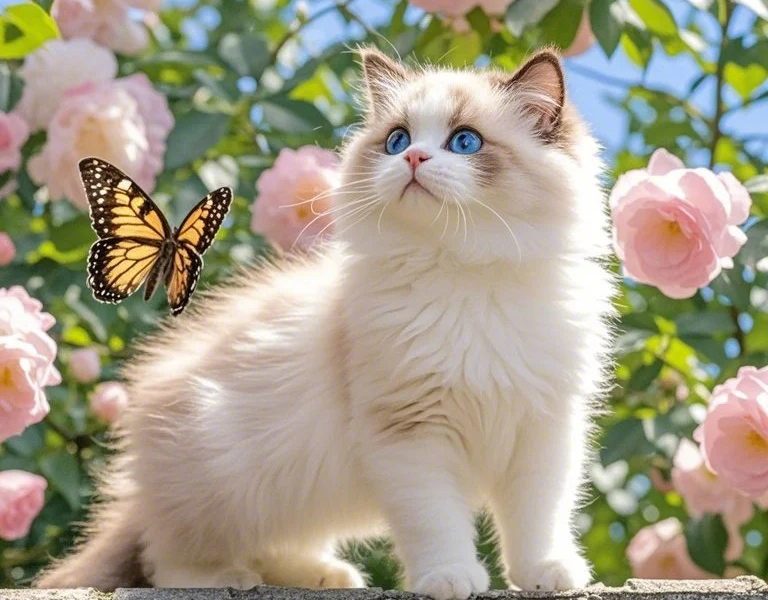
- • Eyes: Large, oval, and a striking sapphire blue—the deeper the better
- • Ears: Medium-sized, wide-set, with rounded tips
- • Coat: Semi-long, silky, and rabbit-like in texture
- • Tail: Long, bushy, and plume-like
The Pointed Pattern Palette
Like their Siamese ancestors, Ragdoll cats display color-point patterns, though with crucial differences. Ragdolls are born completely white and develop their color gradually over two to three years, creating a beautiful transformation that owners find captivating.
Traditional Ragdoll Patterns:
| Pattern | Description | Visual Characteristics |
| Colorpoint | Dark points, no white | Classic pointed look like Siamese |
| Mitted | Dark points with white mittens | White paws, chin, and belly |
| Bicolor | Inverted V on face, white legs | Most dramatic contrast |
Recognized Ragdoll Colors:
| Color | Point Color | Body Color |
| Seal | Deep seal brown | Cream to fawn |
| Blue | Slate gray | Bluish white |
| Chocolate | Warm milk chocolate | Ivory |
| Lilac | Frosty gray with pink tone | Glacial white |
| Red/Flame | Orange-red | Cream |
| Cream | Pale cream | White |
Modern Additions:
- • Tortoiseshell: Mix of red and seal or cream and chocolate
- • Lynx: Tabby striping on points
- • Torbie: Combination of tortoiseshell and lynx patterns

Personality: The Epitome of Feline Gentleness
The Famous Ragdoll Flop
The breed’s namesake behavior—the “Ragdoll flop”—is more than just a party trick. When picked up, these cats genuinely relax their muscles and go limp, creating a sensation of holding a soft, warm, purring bundle of complete trust. This behavior reflects their fundamental nature: Ragdolls are cats that have been bred for docility and affection.
Core Personality Traits:
1. Docility: Exceptionally gentle and non-aggressive
2. Affection: Deep bonding with family members
3. Patience: Tolerant of handling, grooming, and children’s attention
4. Intelligence: Problem-solvers who learn quickly
5. Vocalization: Soft, melodic voices—not loud or demanding
6. Playfulness: Maintain kitten-like enthusiasm into adulthood
The “Puppy Cat” Behavior
Ragdolls earned their “puppy cat” nickname through behaviors that blur the line between feline and canine companionship.
Dog-Like Behaviors:
- • Following: Trail their humans from room to room
- • Greeting: Meet family members at the door
- • Fetching: Many enjoy retrieving toys
- • Leash Walking: Can be trained to walk on harness and leash
- • Sleeping Habits: Prefer to sleep near or on their people
- • Door Waiting: Patiently wait outside bathroom and bedroom doors
Social Dynamics
Ragdolls are notably social cats that thrive on companionship. Unlike some breeds that tolerate human presence, Ragdolls actively seek it out and can become depressed if left alone for extended periods.
Social Needs:
- • Human Interaction: Need daily quality time with family
- • Multi-Pet Households: Generally get along well with other pets
- • Children: Excellent with respectful children due to their patience
- • Strangers: Usually welcoming rather than fearful
- • Solitude Tolerance: Low—prefer company

Health and Care: Maintaining the Gentle Giant
Genetic Health Profile
Ragdolls are generally healthy cats, but like all purebreds, they have predispositions to certain genetic conditions. Responsible breeding practices have significantly reduced these risks, but awareness remains important for owners.
Health Considerations:
| Condition | Description | Prevention/Management |
| Hypertrophic Cardiomyopathy (HCM) | Heart muscle thickening | Regular cardiac screening |
| Polycystic Kidney Disease (PKD) | Cysts in kidneys | Genetic testing |
| Urinary Tract Issues | FLUTD, crystals | Proper hydration, diet |
| Obesity | Weight gain tendency | Portion control, exercise |
| Hairballs | Due to long coat | Regular grooming |
Nutritional Requirements
Given their large size and tendency toward weight gain, Ragdolls require carefully managed nutrition.
Dietary Guidelines:
- • High-Quality Protein: Essential for muscle maintenance
- • Controlled Calories: Prevent obesity while supporting size
- • Adequate Hydration: Wet food recommended to prevent urinary issues
- • Age-Appropriate: Adjust for kitten, adult, and senior life stages
- • Scheduled Feeding: Better than free-feeding for weight control
Grooming the Silky Coat
Despite their semi-long hair, Ragdolls have surprisingly low-maintenance coats. The lack of an undercoat means minimal matting and shedding compared to other long-haired breeds.
Grooming Routine:
- ☐ Weekly Brushing: Prevents tangles and reduces shedding
- ☐ Nail Trimming: Every 2-3 weeks
- ☐ Ear Cleaning: Check and clean as needed
- ☐ Dental Care: Brush teeth or provide dental treats
- ☐ Bathing: Rarely needed, but some enjoy it
- ☐ Eye Cleaning: Gentle wiping of any discharge
Grooming Tools:
- • Stainless steel comb for weekly sessions
- • Slicker brush for removing loose hair
- • Nail clippers designed for cats
- • Pet-safe wipes for quick cleanups

Living with a Ragdoll: The Complete Experience
The Ideal Ragdoll Home
Ragdolls adapt well to various living situations, but certain environments allow them to thrive best.
Home Requirements:
- • Space: Appreciate room to roam but adapt to apartments
- • Safety: Indoor-only lifestyle strongly recommended
- • Comfort: Soft beds and high perches
- • Companionship: Presence of humans or other pets
- • Entertainment: Interactive toys and climbing structures
- • Window Access: Love to watch the world outside
Multi-Pet Dynamics
Ragdolls generally excel in multi-pet households due to their easygoing nature.
Compatibility:
- • Other Cats: Usually welcoming, may be submissive to dominant cats
- • Dogs: Often bond well with cat-friendly dogs
- • Small Pets: Gentle but should be supervised
- • Children: Excellent companions for respectful kids
- • Elderly: Perfect calm companions for seniors
Daily Life with a Ragdoll
A typical day with a Ragdoll is filled with soft purrs, gentle head-butts, and moments of floppy relaxation.
Daily Routine:
Morning:
- • Wake up to gentle pawing or soft meows
- • Breakfast time with enthusiastic participation
- • Morning grooming session (if your Ragdoll enjoys it)
- • Follow you through morning routine
Afternoon:
- • Nap time in a sunny spot or on your lap
- • Play sessions with interactive toys
- • Window watching and “hunting” activities
- • More napping
Evening:
- • Dinner time excitement
- • Family time on the couch
- • Bedtime companionship
- • Nighttime cuddles (if allowed on bed)

The Ragdoll in Modern Culture
Popularity and Recognition
The Ragdoll has consistently ranked among the most popular cat breeds since achieving championship status. Their combination of stunning beauty and exceptional temperament has won hearts worldwide.
Popularity Factors:
- • Family-Friendly: Ideal for households with children
- • Therapy Work: Excellent emotional support animals
- • Show Ring Success: Consistent winners in cat shows
- • Social Media Stars: Popular on Instagram and YouTube
- • Celebrity Pets: Owned by numerous celebrities
Breeding Ethics and Preservation
As the breed’s popularity has grown, so has the importance of ethical breeding practices. Reputable breeders prioritize health testing, genetic diversity, and preservation of the breed’s gentle temperament.
Ethical Breeding Priorities:
- • Health Screening: HCM and PKD testing mandatory
- • Temperament: Maintaining the docile, affectionate nature
- • Genetic Diversity: Preventing inbreeding depression
- • Education: Teaching owners about Ragdoll-specific needs
- • Indoor Advocacy: Promoting indoor-only lifestyles
Variations and Related Breeds
The Ragdoll’s success has inspired several related breeds and variations.
Related Breeds:
| Breed | Relationship | Key Differences |
| Ragamuffin | Developed from Ragdolls | More color variety, rounded head |
| Birman | Possible ancestor | White gloves, stockier build |
| Snowshoe | Partial Ragdoll heritage | Shorter coat, white markings |
—
Conclusion: A Breed Like No Other
The Ragdoll cat represents a unique achievement in feline breeding—a cat that combines stunning beauty with an exceptionally gentle temperament. From Josephine’s accidental legacy to their current status as one of the world’s most beloved breeds, Ragdolls have maintained their essential nature: cats that genuinely love to be loved.
Their journey from California streets to global stardom is a testament to the power of selective breeding guided by a clear vision. Ann Baker may have been controversial, but her dedication created something truly special—a breed that offers companionship of remarkable depth and gentleness.
For those seeking a feline companion that embodies patience, affection, and beauty, the Ragdoll stands alone. They’re not just pets; they’re family members who ask only for love and return it tenfold.
Whether you’re drawn to their sapphire eyes, silky coats, or legendary personalities, one thing is certain: life with a Ragdoll is softer, gentler, and filled with more love than you ever imagined possible.
—
Do you share your life with a Ragdoll? Share your stories and photos in the comments below!
—
_1_nini粘fufu_来自小红书网页版-320x200.jpg)